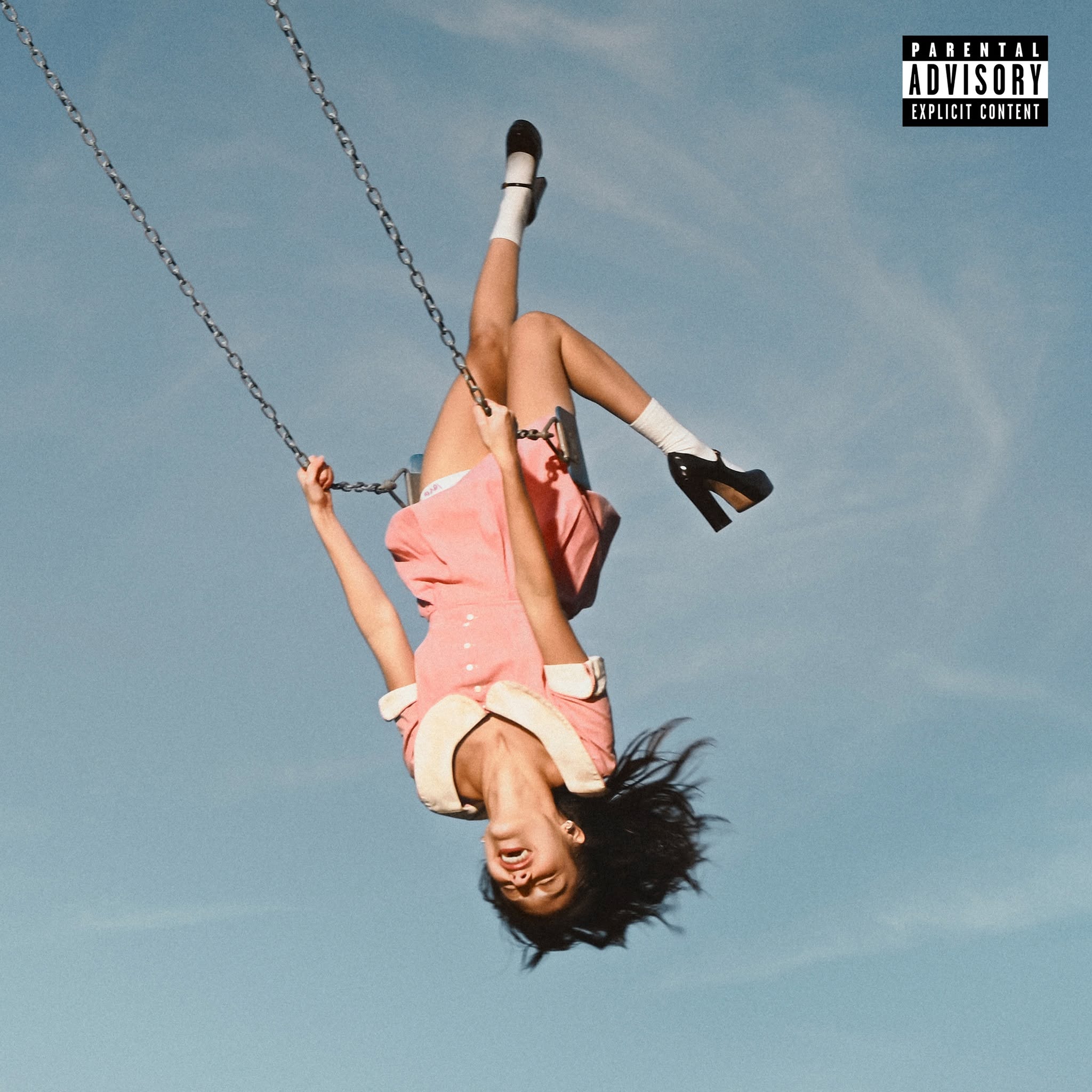
Olivia Rodrigo – You Seem Pretty Sad For A Girl So In Love
Pop
93%
People have been writing songs about love and heartbreak for as long as there has been music. It’s a bottomless creative well, still as full of possibility as it ever was. Partly because it’s so universal – we’ve all known the butterflies that come with falling in love and the emptiness that comes with losing it – yet at the same time, every love is different. You could go your whole life listening to break-up records that feel worlds apart from your own experiences, only to one day stumble upon a song that seems to sum up your own thoughts and feelings better than you can.
The crux of You Seem Pretty Sad For A Girl So In Love, the source from which all the rest of its brilliance stems, is the refreshing alternate perspective Olivia Rodrigo offers, as she details her own experiences falling in and out of love. It becomes a concept album of sorts; moreso than just songs united by shared themes, but how its tells a story, chronicling the rise and fall of a relationship. Jumping in at the deep end with a love that feels all-consuming, bordering on obsessive (‘Drop Dead’). So strange and furious that it feels indescribable (“I want you more than any stupid song could ever say” and “It’s too hard to describe this, In a way that feels honest” on ‘Stupid Song’ and ‘Honeybee’ respectively). Being so consumed by a romantic connection that you lose track of your own identity outside of it (‘Maggots For Brains’ and ‘Purple’).
When so many songs look at love as something healing and uplifting, You Seem Pretty Sad depicts it as something more tumultuous. A torrent of hormones and emotions that turns you into something you don’t want to be. Jealous, obsessive, clingy, overthinking everything, changing yourself to please someone else. The album sees Olivia chasing in vain this storybook idea of romance, only to be confronted by a reality that’s far more messy and complicated. It’s about a relationship falling apart not necessarily because it was anyone’s fault, but because the act of loving itself didn’t live up to expectations. The album hits a turning point with this realisation at the end of ‘Purple’, with the B side dealing with the fallout. Realising that it isn’t the perfect happily ever after (‘The Cure’ and ‘Begged’), acknowledging that the relationship isn’t healthy (‘What’s Wrong With Me’), and drifting apart for one’s own well-being despite a strong and lingering connection (‘Less’ and ‘Cigarette Smoke’).
With this change of perspective comes a shift in sound. There’s no shitty ex to rage at when love itself is at fault, so outside of the jealous rocker ‘My Way’, Olivia makes a conscious move away from the angsty, venomous pop punk of her first two records. Instead Pretty Sad is largely a lush, bittersweet affair that embraces 80s New Wave, and draws heavy influence from The Cure. Just in case you couldn’t already tell by the way she namedrops ‘Just Like Heaven’… or literally has a song called ‘The Cure’… or the fact that she duets with Robert Smith on ‘What’s Wrong With Me’. Jokes aside, she wears it well, pairing those stylistic sensibilities with some stunning earworms on tracks like the album highlight ‘Maggots For Brains’. Yet Olivia casts her net wider than that, drawing on a number of other influences and deftly adapting them to her own vision.
‘U + Me =<3’ has a lot of dreamy indie energy in the vein of Soccer Mommy and Phoebe Bridgers, while the quirky campy synthpop of ‘Expectations’ recalls the likes of Devo and Talking Heads. ‘Honeybee’ and ‘Less’ see her turning her talents to piano balladry, with the former especially proving to be some of her most elegant and refined work to date. The understated orchestration and choral elements giving a holy reverence to the way she talks about love. Meanwhile ‘The Cure’ doesn’t lean the way its name suggests, instead creating a slow burn symphony of strings and alt rock energy that feels descended from Mellon Collie era Smashing Pumpkins. The gradual build towards the climactic refrain of “I’m unravelled”, the oddly uplifting darkness to it, the ambition and grandeur beyond what one would necessarily expect from a major pop star, all working to make it feel like the album’s true centrepiece.
Other than her over-reliance on talk-sing bridges, Olivia doesn’t really put a foot wrong here. You Seem Pretty Sad takes this endearingly naïve and idealistic view of love, only to then dissect it with real maturity and nuance. Weaving that journey of discovery step by step across the album in a way that ensures it is greater than the sum of its parts. Though she’s already amassed plenty of great singles (and this release adds several more to her repertoire), right from the start Olivia has always felt like more of an album artist than many of her peers. That’s never been more true than with Pretty Sad; it’s a body of work more considered, creative and cohesive than anything else in the modern pop sphere. It’s essential listening, something I would wholeheartedly recommend to anyone and everyone, and one of the standout albums of the decade thus far.
 Belwood Music