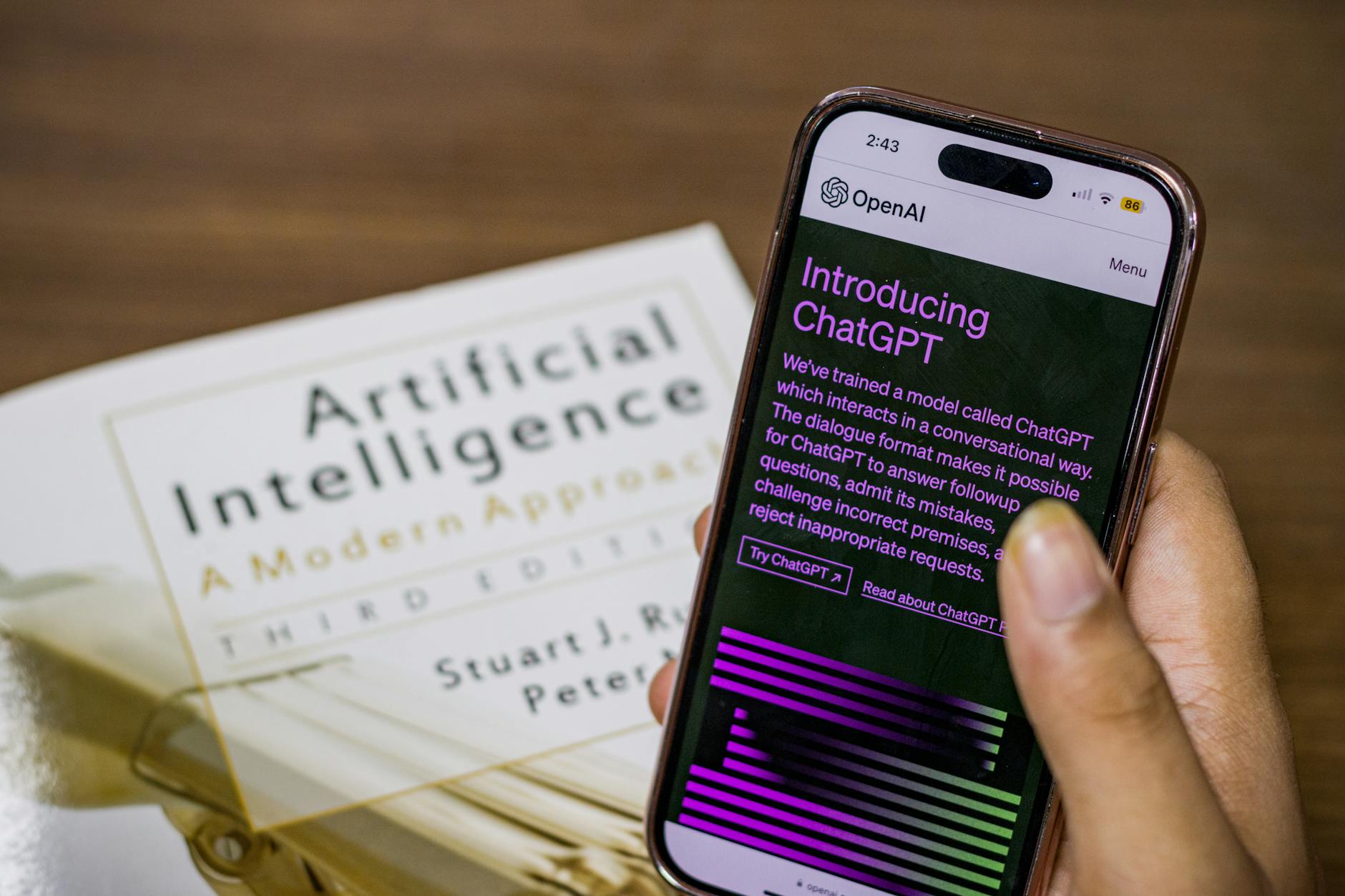
The latest fad within the tech world is spreading like wildfire; and unlike the volatile nature of environmentally irresponsible cryptocurrencies, the completely undesired push for the ‘metaverse’, and the blatant worthlessness of NFTs, this one actually has the potential to become part of the average person’s everyday life. For better or for worse, 2023 has seen a major push in the field of AI generated art. With the right program, anyone can input a brief prompt and be presented in mere moments with visuals or written content devised by a complex algorithm. It’s a technology fraught with caveats and controversies, moral quandaries and technical limitations, and before we’ve had the chance as a society to figure any of them out, the AI drive is already moving towards another artistic platform – music. What does this brave new world have in store?
Complications aside, it’s not hard to see the appeal of AI created art for personal use. It puts the power of creation into everyone’s hands. Perhaps you’d like some fan art or fan fiction of your favourite characters and don’t have the time to make it through conventional methods. Maybe you’ve been looking through generic stock photos for something a bit too specific, and would like something able to cater to your needs. Perhaps you briefly pondered “what would a Star Wars film by Wes Anderson look like?“, but of course wouldn’t bother with the expense of commissioning artwork just to satisfy a fleeting intrusive thought. AI for personal use, as a toy or a source of novelty, can be considered mostly harmless (with a major asterisk we’ll address shortly), but as soon as commercial uses enter the equation things immediately get a lot more complicated.
“Who owns the copyright for an AI creation?” is one of the big unanswered questions for example. If anyone can get the same result with the same prompt, can anyone even claim ownership? If you have a sufficiently complex prompt, and are first to claim its end results, is that enough to warrant ownership? Perhaps it isn’t about the person issuing the prompt at all, maybe they’re analogous to someone commissioning art, and the program itself is the artist. If so, does that mean the company that made the program owns everything that program makes? It’s as valid a claim as any, but given there’s no way they could anticipate every possible prompt that someone may concoct, you could equally make the claim that the AI is merely a tool and the end result depends on the user. These are the kind of issues that remain wholly unresolved, and yet the push for AI plows forwards regardless.
What’s interesting is that the new frontier of music has the potential to let this new technology avoid a lot of the controversies and limitations that have thus far held it back. The biggest criticism for this new technology, in both commercial and personal contexts, is how it plagiarises existing art. A computer operates in 1s and 0s, it has no frame of reference of what a tree, or a car, or a human hand is supposed to look like. The program relies on us to provide it with context. It needs millions of reference images in order to know what the subject is meant to look like, and it needs just as many examples of human art in order to understand stylistic terms such as impressionist or anime or whatever look we’re aiming for. If you present the program with a library of work from human artists to draw from, then all it can do is try and replicate it. Without the consent of an artist having their work used as a frame of reference, everything an AI makes based on their work could be considered plagiarism. The same is true of text based programs; a computer has no way of knowing how to structure a story that’s comprehensible, never mind actually worth reading, without drawing from the already existing written work provided to it. Numerical computation and visual/text based art are too far removed from each other for AI to ever do anything beyond glorified copying.
Music theory however is itself rooted in mathematics. There are only so many notes, only so many ways those notes can be combined into chords, only so many ways those chords can be sequenced. It can all be broken down into an easily repeatable formula – something a lot easier for a computer to process than asking it to paint a platypus having a dance-off with a Roomba in the Tower Ballroom and expecting it to know what any of that means. Tell the program the right key, set a tempo, give it a scale to noodle around in etc., and suddenly you have music – not necessarily good music, but music all the same. The mathematical limitations of music theory mean that an AI algorithm could act without needing sample music to plagiarise.
We’ve already seen plenty of petty plagiarism cases brought against artists and inevitably dropped, because as similar as songs may occasionally sound, it’s an inevitable result of there only being so many chords. Copyrighting a chord sequence makes about as much sense as owning the colour blue or the concept of sentences – it’s an essential building block that belongs to no one, and by extension would hypothetically be fair game for AI too. Keyboards have let you push a button to produce a backing track for decades now. Producers can make music by pushing a few buttons without ever touching an instrument or knowing any music theory. Hell, half the songs in the billboard charts at any given time are built upon samples and remixes of work by other artists, which isn’t too far removed from what current AI is doing.
From a purely practical standpoint, music is a better fit as an artistic medium for AI than visual or written media, but that does raise a few questions that those pushing this new technology have not been asking themselves nearly enough. Art is a difficult thing for a computer to comprehend, and it’s only the mathematical aspect that makes music a more feasible prospect, so why are we using this technology for art at all? It is clearly better suited for crunching numbers than making masterpieces. The terms “computer” and “calculator” didn’t always refer to machines, they were originally job descriptions. Some poor folks had the tedious, soul-sucking role of doing equations day in day out. There’s more to being a person than mindless number crunching, and as technology improved these new “electronic computers” became better at equations than their creators. People’s jobs became using computers, rather than being computers. The march of progress, advancements in technology, are supposed to make our lives easier. They’re supposed to take the tedious tasks and back-breaking manual labour away from us, and give us more time to enjoy creative pursuits. Why save time making art using AI, when you can have AI streamline your workload and have more time to master making art of your own? What perverse future awaits us if creativity is reserved for machines, while mindless mechanical tasks are still performed by people.
I don’t think AI is going away. In moderation I think it can be a useful tool. I’ve heard nothing but praise for Lightroom’s de-noise AI for instance, acting as a way to help photographers realise their artistic vision. Leaving art entirely in the hands of an algorithm however, that’s a different story. Ultimately it leaves me wondering: can something made by AI ever truly be art? It may sound a bit “if a tree falls in the forest…”, but think about it. Is art not an inherently human endeavour? It’s an act of expression, of imagination, a way to connect. A computer has no thoughts or feelings to express, no way to imagine beyond what it is shown, there’s no person at the other end to connect with, no purpose or intention behind what it makes besides being told to. Art isn’t about the instant gratification of some end product either, the journey of making it and the spark of inspiration that started it all are just as important as the end result. The best music, the best art in general, is that which comes from the heart and sees the artist impart a piece of themselves in their work. That’s something no AI, no matter how advanced, can ever replicate.
 Belwood Music