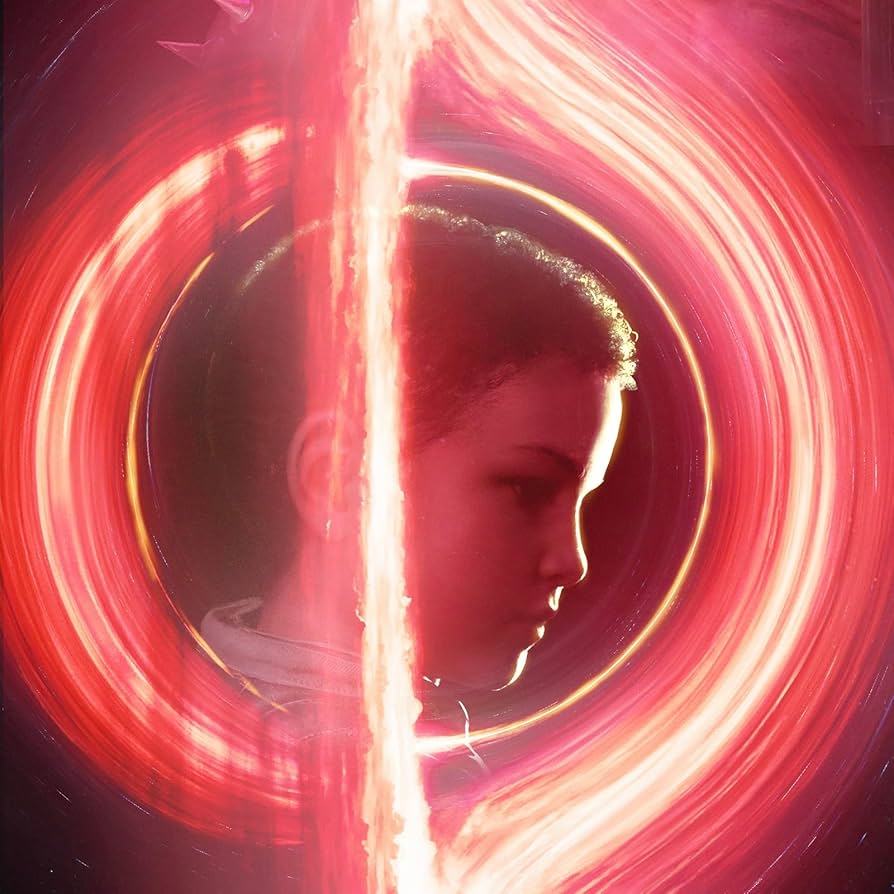
Coheed and Cambria – The Father of Make Believe
Hard Rock | Progressive Rock | Emo
84%
There’s a world in which Coheed and Cambria are one of my favourite bands. I grew up on prog rock; a fascination started by hearing Rush’s 2112 for the first time, and realising that music could be used to tell grand, sweeping stories. From that point forward my desire for intricate storytelling developed into an abiding love for concept albums, that would weave together songs like chapters of book to serve a greater narrative. On paper Coheed seem like a dream come true – a band creating an epic sci-fi story that spans multiple interconnected albums. It’s the kinda thing my younger self would have obsessed over and made my entire personality. Somehow though, it never quite lived up to that promise.
An epic multi-album spanning story only works if you’re able to follow the story, and despite my best efforts I just haven’t a clue. If I read the comics that the band have released I might have a clearer idea what the songs are about, but I shouldn’t have to do that much homework. Maybe the lyrics aren’t clear enough, maybe they don’t lean enough into theatricality to give characters a unique voice. Whatever the issue, it means that one of the main draws of Coheed’s work is lost on me. The silver lining in all this is that when the band are firing on all cylinders, none of that stuff matters. It’s like watching a Nolan film; I haven’t a clue what’s going on, but I’m locked in for the experience. Coheed’s best records make up for the impenetrable lore with great musicality. If I’m listening to ‘Ten Speed (Of God’s Blood & Burial)’, I don’t need to know how its meta narrative about a talking bicycle fits into the overarching story to know that the song fucking slaps.
For the most part, The Father of Make Believe is pure unabashed fun. Though the opening piano balladry of ‘Yesterday’s Lost’ does a superb job of sounding like the overture that begins some ambitious and fantastical tale, much of what follows actually finds the band at their most straightforward and accessible. More importantly, they nail it. The next four tracks could be a strong contender for the best run of songs in 2025. ‘Goodbye, Sunshine’ sets a high bar for big anthemic choruses only for it to be immediately surpassed by ‘Searching for Tomorrow’, which dishes out bigger riffs, bigger hooks, and a vicious snarling solo for good measure. The title track reminds me a lot of fellow album-spanning concept band The Dear Hunter in its use of backing vocals, shifting styles, and the rise and fall between its heavier and softer sections. ‘Meri of Mercy’ is the closest I’ve heard Coheed come to creating a romantic love song. It fully commits to the cringe and emerges at the other side feeling surprisingly earnest, helped in no small part by yet another killer earworm chorus.
Elsewhere the stripped back acoustic number ‘Corner My Confidence’ provides an opportunity for Claudio Sanchez’ vocals to really shine, and does a great balancing act of offering a welcome change of pace while not feeling at all out of place mixed in amongst all the high octane rockers. Yet the highlight for me has to be ‘Someone Who Can’. It feels like Coheed’s love letter to 80s AOR, sounding like a Journey deep cut with an added dash of ‘Boys of Summer’, and it just radiates positive energy from start to finish.
The album isn’t quite wall to wall bangers though. The feral snarling vocal style on ‘Blind Side Sonny’, reminiscent of Foo Fighters’ ‘White Limo’, just does not work for me at all. Likewise the weird experimentation on ‘Play The Poet’, that tries its hand at being a Beastie Boys pastiche, a Fall Out Boy song, and baby’s first death metal, with little success or cohesion. The album’s closing suite ‘The Continuum’ also sees the band begin to get encumbered by their own lore again. Admirably upping the musical complexity, but sadly losing just a tad too much of their otherwise strong melodic sensibilities in the process – though part IV ‘So It Goes’ does admittedly end the suite on a wonderfully playful ELO-esque note!
When walking away from The Father of Make Believe, the album’s missteps don’t leave much of a lasting impression, but those big hooks still keep playing on repeat and drawing me back in for another go round. This is easily the most fun I’ve had listening to a Coheed record since From Fear Through the Eyes of Madness, and feels like a brilliant jumping in point for new listeners. A few more records like this could see the world where Coheed are one of my favourite bands drift that bit closer to reality.

